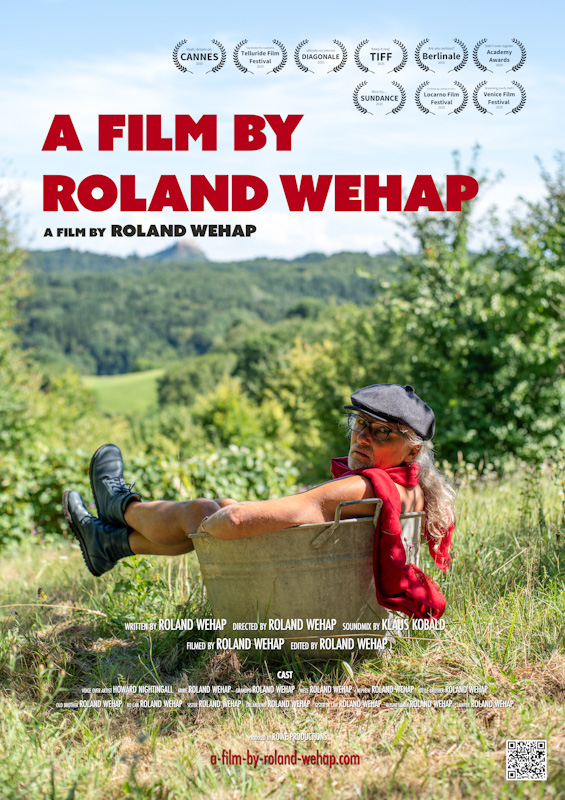
THE INTERVIEW

November, 2025

ROLAND WEHAP

DIRECTORS OF A FILM BY ROLAND WEHAP

HONORABLE MENTION
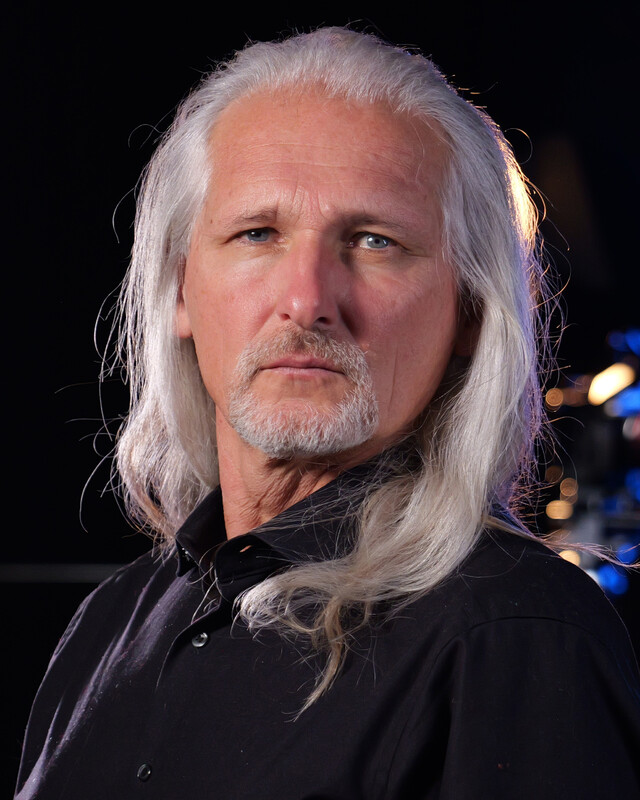
Roland, tell us a bit more about yourself. Where does your desire to be a director come from?
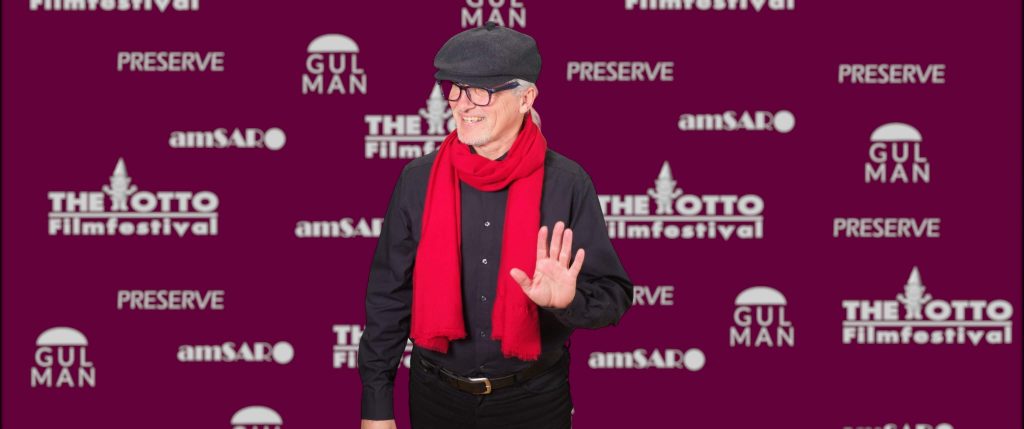
Unlike in the story of my short film, money, wealth, or fame were never a reason for me to make films. When I was 16, I grabbed my father’s Super 8 camera — he used it to shoot family films — loaded a reel of film, and that was it. I was hooked. I knew immediately: this is my thing. Back then, everything was still technically cumbersome and time-consuming, but the way you could tell stories through film completely fascinated me. I didn’t think at all about whether it could one day become a profession. It was simply exciting to wait for the developed film to arrive in the mailbox, thread it into the projector, set up the screen, darken the room, and watch in suspense what I had shot ten days earlier — and, of course, get annoyed about mistakes, only to learn from them.

What is your background?

I never went to film school or attended any courses. In my hometown Graz in Austria — by the way, the same as Arnold Schwarzenegger’s — there weren’t any options like that at the time. But I absorbed everything related to film that I could get my hands on. I was a regular at libraries, because there was no internet or YouTube back then. During school I studied violin and piano, but after graduation I went in a completely different direction — I studied German literature and geography. During summer breaks I travelled a lot, especially to Asia, where I shot my first documentaries. With a kind of travelling cinema, I later visited schools, screened my films, and earned my first money with filmmaking. After university I decided to stay in the film world. I started getting my first commissions, and from there it just kept going — all the way to today.

What are your references for A Film by Roland Wehap?

I mainly make documentaries and work with a very small team. That works quite well in this genre and even has some advantages. People often call me a “one-man show” — which isn’t entirely true — but I do handle the key parts myself: production, camera, editing, and directing.
What works in documentaries, however, seemed impossible for a feature film — there’s a reason those credit lists are so long. But one day I thought: let’s find out. So I tried to make a narrative film where I would do as much as possible on my own.

Roland, you won an Honorable Mention at the RED Movie Awards. What does that mean to you?

It means a lot to me to receive this kind of recognition. I’m thrilled that the film has already won several awards — and especially that the story seems to resonate internationally, across different cultures.
I’m competing with a film made with the simplest means and a micro-budget, up against big productions with generous funding and large crews. But it was important to me to finance the film entirely on my own — no crowdfunding, nothing. That way I felt truly free and owed nothing to anyone.
I actually do it the other way around: if someone likes the film, they can now buy props I no longer need — or make a small donation — all through the film’s website.
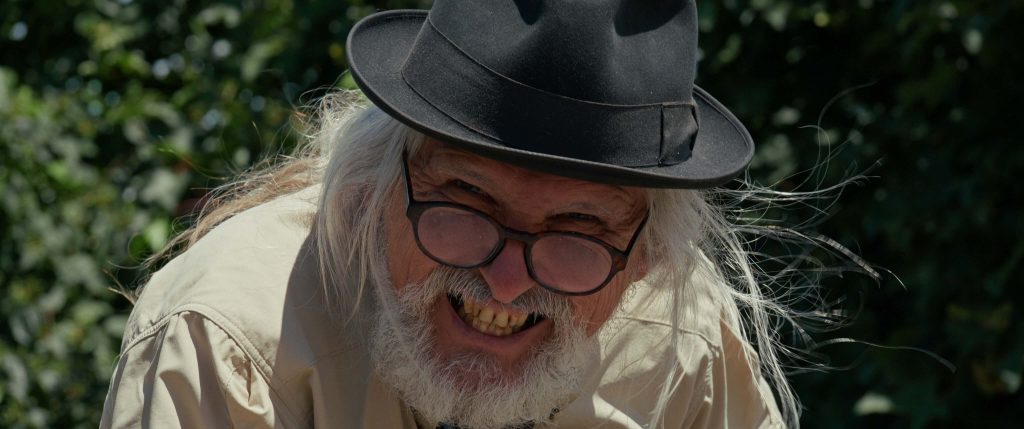
Your movie cleverly mixes fiction and autobiography. How much of the story truly mirrors your own experience as a filmmaker?
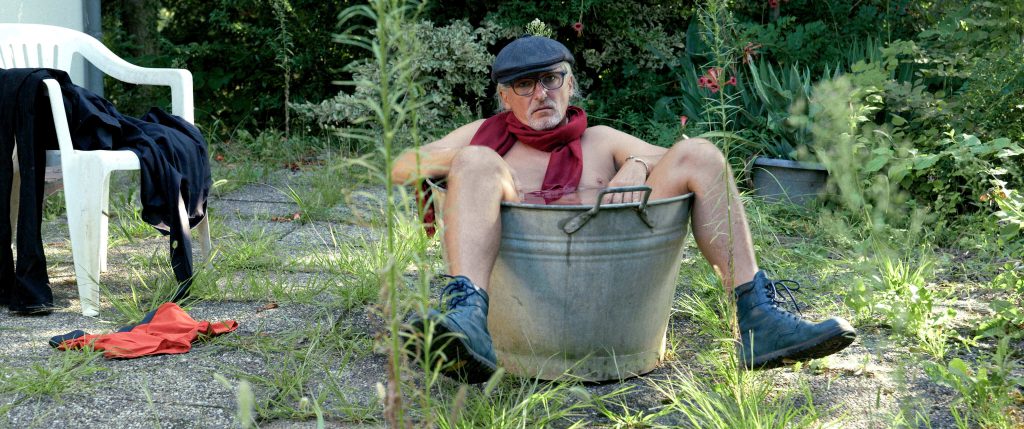
A lot of it reflects my own biography — or rather, my experiences in the film industry. But it’s not only based on my personal journey; it also mirrors what many independent filmmakers go through. Everyone will probably recognize a bit of themselves in it. The story also embodies the true indie spirit: never giving up, finishing the film no matter what it takes — and I don’t mean money. After all, creativity begins where the budget ends. The overall storyline is, of course, fictional, but inspired by real experiences. One thing I can say for sure: I never have — and never plan to — start my own film festival.

Producing, acting, shooting, editing, and even handling CGI and makeup alone is a massive challenge. Which part was the most demanding — and which gave you the most joy?
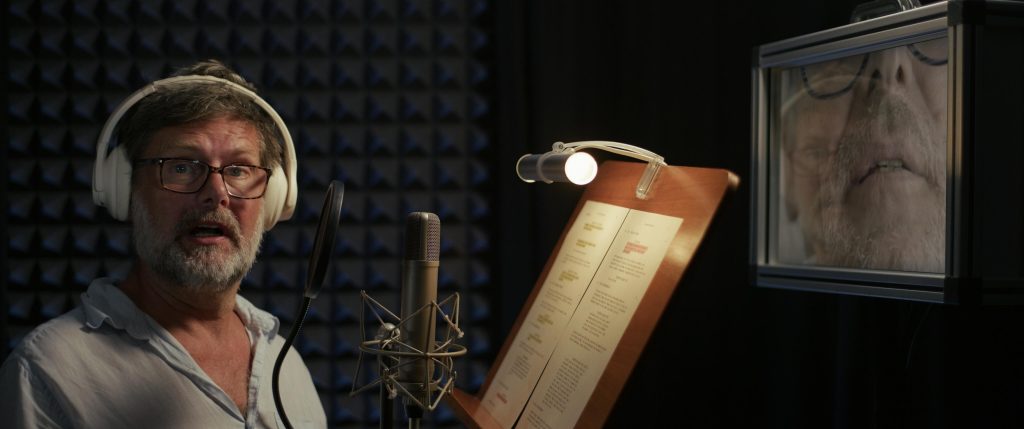
Everything that happens behind the camera or in post-production is part of my routine as a filmmaker — that’s where I feel at home and have lots of experience. But everything in front of the camera was completely new territory for me, and more than once I worried I might make a total fool of myself. Even things like makeup or choosing costumes were a nightmare. I spent hours watching influencer videos on makeup techniques and even dove into the drag community — because I was also playing female roles. In those areas I truly started from zero. They’re not perfect in the film, of course — but that’s part of the concept: showing those imperfections and letting the boundaries between fiction and reality blur. The greatest joy came at the end, when the Dolby Atmos sound mix was finished — done by my longtime colleague Klaus Kobald. Along with Howard Nightingall, who voiced my character as the director in the film, he was the only professional specialist involved in the project.

You’ve been active in the film world for decades, from documentary and corporate work to fiction. How did your previous experience influence this project?
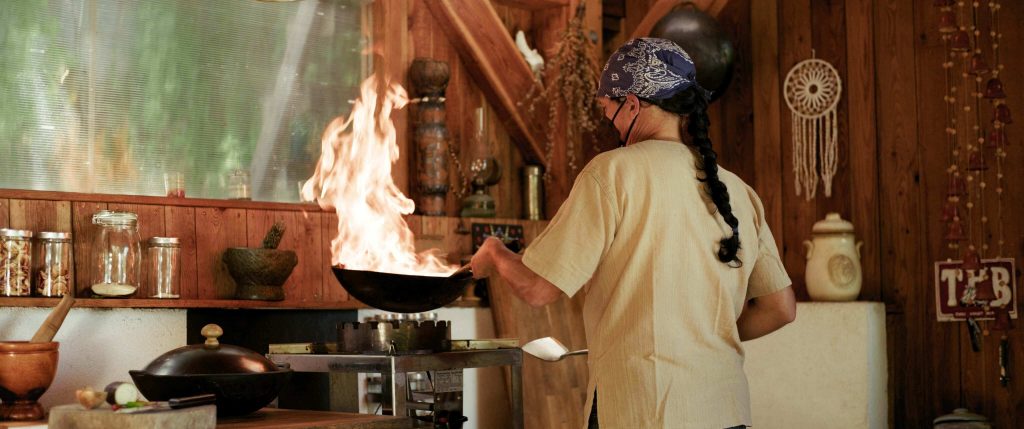
Having built all my film knowledge over more than 40 years through learning by doing, I was able to handle most of it myself. Through my own production company, I also have access to all the necessary equipment — and I know how to use it. Since learning never really ends, I picked up a few new skills for this project. They’re still a bit rough, I admit — but that’s exactly what excites me: learning something new and getting better at it.

What was the biggest challenge during the shoot?

Probably getting those silicone breasts on and positioned correctly. But overall, it was the constant running back and forth between being the cameraman and the actor. I didn’t want to work with autofocus, so I set up a dummy figure to focus on, then got into costume, acted the scene, and immediately ran back to the camera to check the shot. After a while, that kind of thing drives you insane.

Do you have a particular anecdote to share with us?

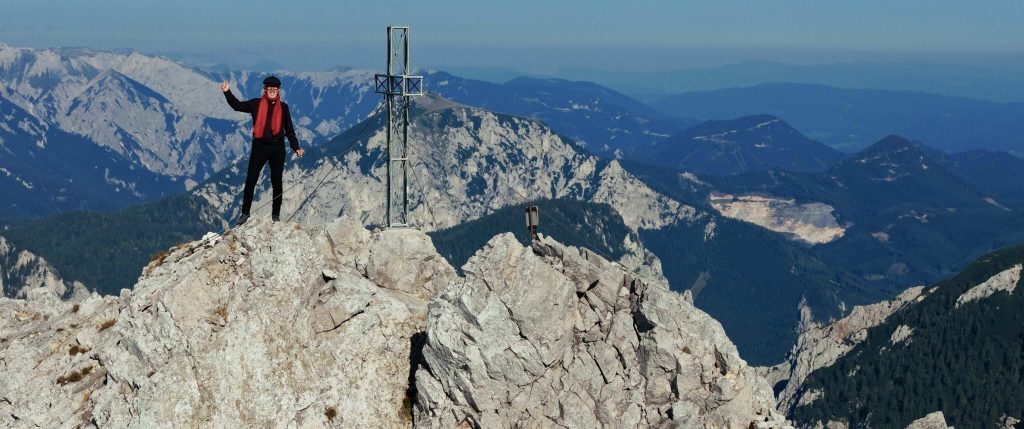
One scene takes place on a mountain peak — a beautiful freestanding rock you have to climb a bit to reach. I was also the porter, mountain guide, and drone pilot. So I carried a heavy backpack with all my gear up the mountain.
The first time, the weather turned just as I reached the summit — so I had to try again. The second time, the weather was fine, but the wind was too strong to fly the drone. On the third attempt, I met a man who often hikes there. He asked me which expedition I was training for — he’d seen me climbing that mountain three times in a row with the same heavy backpack.
What is your next project?

There are several commissioned films currently in production or in planning. That’s how I make my living — and it allows me to occasionally fund personal projects like A Film by Roland Wehap. After the success of this film, I’ve definitely caught the bug. Awards like the one from your festival are a huge motivation to continue in that direction. And who knows — maybe one day a producer will come along who’s interested in developing a feature-length version of the story. After all, you don’t always have to do everything alone.