THE INTERVIEW

March, 2026

LEE HARRY

DIRECTORS OF THE HEIRESS

BEST COMEDY
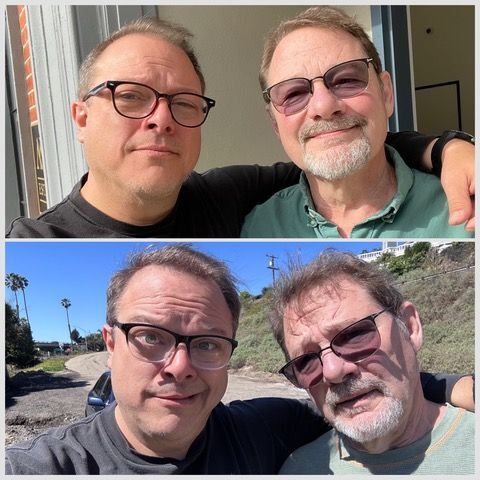
Lee, tell us a bit more about yourself. Where does your desire to be a director come from?
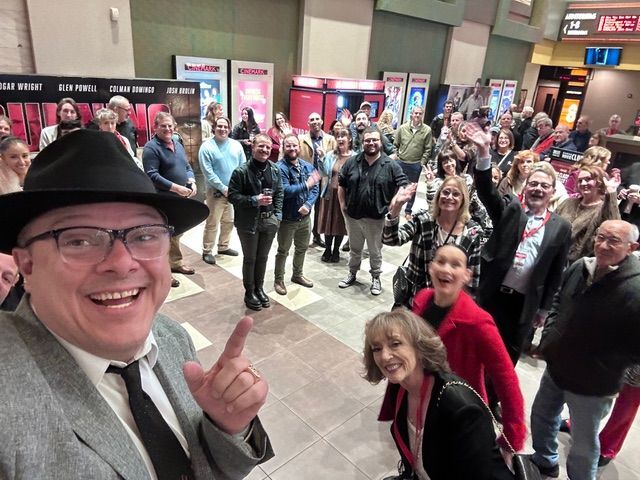
I was a theater kid in high school, and enjoyed performing in plays, musicals and variety shows.  I was lucky to direct our senior show STORY THEATER and had a blast helping the actors craft their performances, while knowing when to step back and let their natural talents push through.  It was the first time I felt somewhat in control of a narrative.

What is your background?

I was a typical Super 8 teenager making stop-motion dinosaur movies with my childhood friends.  I enrolled in the Cinema department at the University of Bridgeport, CT, and won a Student Academy Award for my film BUTTON, BUTTON based on a Richard Matheson short story.  After moving to Los Angeles with my future wife Jill, I paid my dues as a production assistant on low-budget movies, eventually moving into post-production.  I got a job at a post house in Burbank where we were tasked with recutting the notorious slasher film SILENT NIGHT, DEADLY NIGHT, which was picketed and pulled from theaters the previous holiday season.  I directed 45 minutes of new footage and we put “PART TWO” on the title.  It’s become a bit of a cult movie after all these years.
I directed Korean gang drama STREET SOLDIERS after that, but when it didn’t perform, an editor friend got me into movie trailers.  I’ve always truly enjoyed editing, so it was a natural fit.  My first trailer was for BARTON FINK, followed by RAISING CAIN and AMERICAN ME.  I worked in that industry for almost 30 years, eventually starting my own movie marketing firm.  My last trailer as editor was for NO COUNTRY FOR OLD MEN.

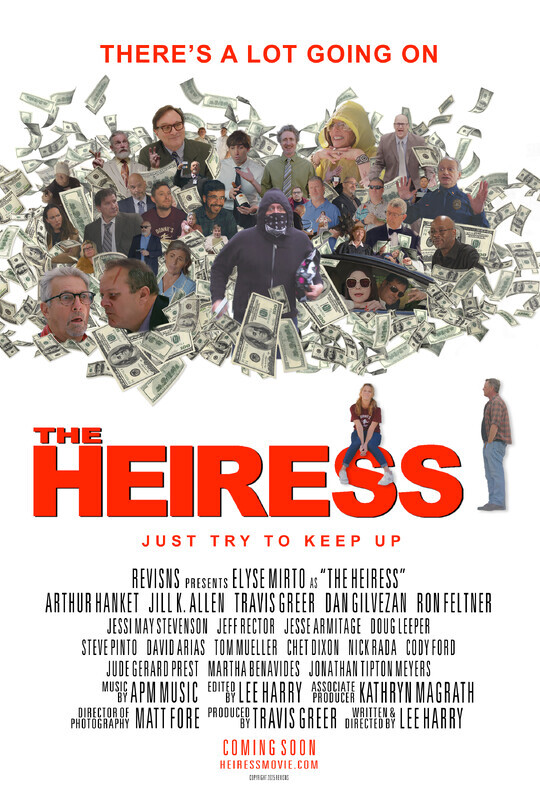
After selling my business, I went back to filmmaking, first with a short, THE WHISTLER, that made the festival rounds.  After we moved to the small surfer town of Ventura on the California coast, we fell in with a group of theater folk who wanted to make movies. After editing their first two features, I pulled a script from my drawer that I had been revising on-and-off for 30 years called THE HEIRESS.
What were your reference for THE HEIRESS?

I definitely reference IT’S A MAD, MAD, MAD, MAD WORLD with its huge cast and crazy set-pieces.  Our father took us to see it in Cinerama. I love screwball comedies like MY MAN GODFREY, IT HAPPENED ONE NIGHT, SULLIVAN’S TRAVELS and BRINGING UP BABY.

Lee, you won Best Comedy at the RED Movie Awards, what does that mean to you?
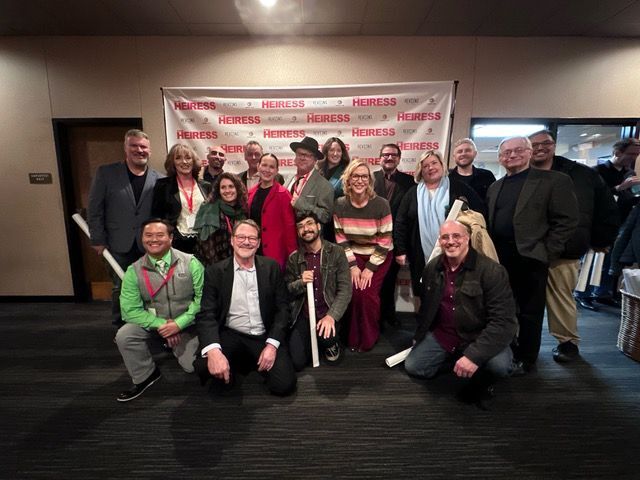
I’m thrilled to be honored at the RED Movie Awards, an international festival, as it confirms that comedy crosses all borders and moviegoers in every country just want to laugh.

The film follows a billionaire heiress navigating the world, What drew you to this concept?

I’m fascinated by the world of ultra-wealthy socialites (MY MAN GODFREY), their distain and ignorance of normal folks and how it usually takes an ordinary person to teach the rich a lesson in charity and humility.

What themes do you explore in The Heiress beyond the action and chase elements?
Hopefully, by dropping the rich spoiled character of Rosey into situations that are foreign to her, she’ll begin to understand the day-to-day issues that the rest of us deal with.  Her normal holier-than-thou attitude doesn’t cut it when trying to ride the bus or order a drink in a bar.  She hears about Dalton and Donnie’s issues with the union, but has no reference herself to their plight.  Her ride with an affluent couple only reinforces the 1% stereotype and Rosey begins to hold a mirror up to her own life.

You produced the film with a budget of $100,000. What were some of the biggest challenges of working with that level of budget?

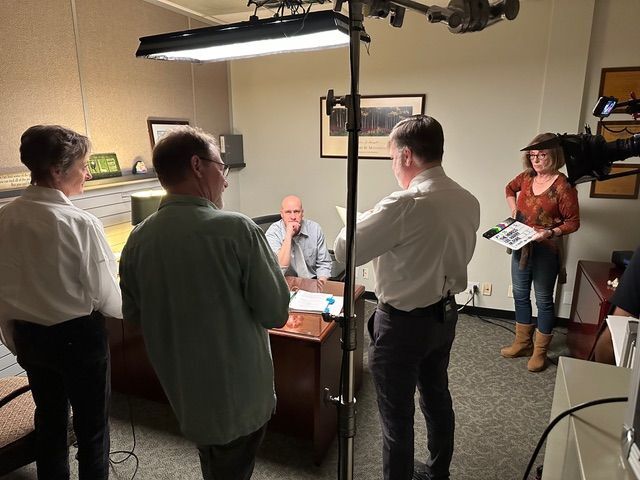
We had made two previous features in town, each for under 5K, so the plan was to use the same model on THE HEIRESS.  Unfortunately, our script had 10 times the scope of the “drawing room” dramedies we had produced earlier, so knowing I could handle all the post-production myself, we started by trying to do the entire physical shoot for $25,000.  Everyone would be working for free as before.  We planned to only shoot Sundays, short days with meals provided.  Our D.P. had his own equipment, so I bought enough insurance to cover that and locations.  Most local businesses let us shoot for free, others did not, but all of them wanted proof of insurance.
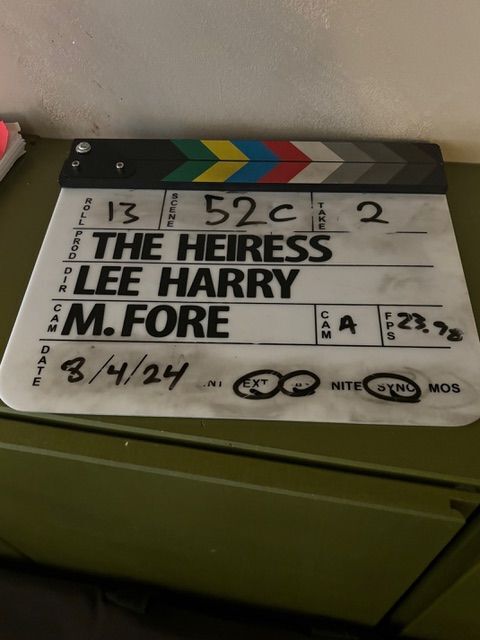
Our D.P. had a newborn and could not commit to our schedule, so we hired Matt Fore, a seasoned cinematographer (also with equipment) who agreed to film the movie if I paid his rate.  He also supplied a gaffer/grip.  I saw where this was going and decided to commit $100,000 to the project, paying the actors a stipend per day plus gas money to sign on to the film.
We shot for 26 Sundays and a couple pick-up days, pretty much what a normal low-budget shoot would entail if condensed to a month.  There was no drama, my sister-in-law provided craft services, and I rented vehicles from Turo and locations from Peerspace and local vendors.
I wrote “86 Scenes” on a whiteboard and after the first day of shooting, I came home, erased it and wrote “84 Scenes”.  It seemed impossible.
We had no art department so I ended up using VFX to swap out product logos, add nameplates and auto license plates, birds, sky, signage and, of course, twins Ned & Jed. There are over 500 VFX shots in the movie.

What was the biggest challenge in this shooting?
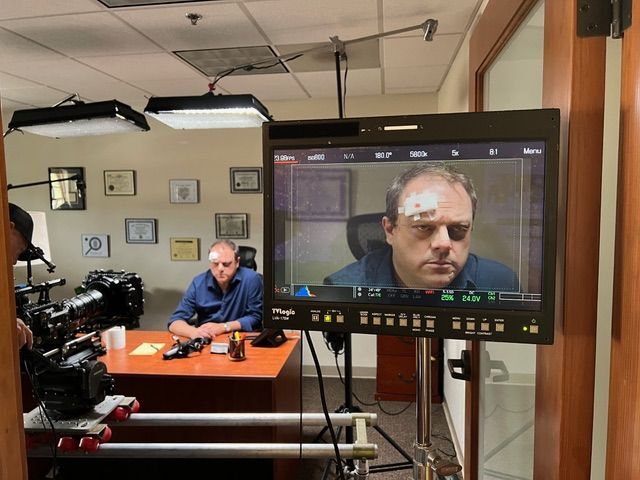
The biggest challenge was keeping everyone excited and engaged in the project for the 3+ years between our table-read and wrap.  When we were looking for a new D.P. it had been five months since we shot.  My producer Travis Greer was great at rallying the troops.  Most of the actors were local talent from his previous films ROCK N’ROLL HEART and TIME CAPSULE so he had a great rapport with everyone on set and in Ventura.  We ended up shooting once a month for 2 years. My wife, Jill K. Allen, was a constant cheerleader and supporter. My daughter, associate producer Kathryn Magrath, stepped in during 2024 to help wrangle the production.

Do you have an anecdote to share with us in particular?

The best anecdote is something that happened in 1988.  After I finished the first draft of the screenplay, I asked our friend Bob Saget to read it.  It was 193 pages.  He was right in the middle of FULL HOUSE and AFV plus his standup, super busy.  We sat and went through the entire script and he gave me some ruthless, but necessary feedback, that eventually helped streamline the movie.  There used to be several more side characters, if you can believe that.  It’s a shame he couldn’t see the finished product.  Rest in peace, Bob.

What is your next project?

I’ll let you know!