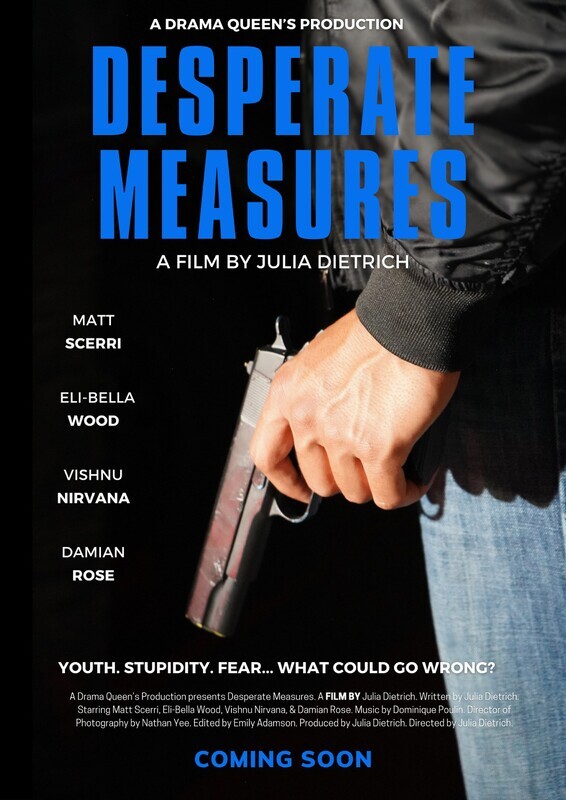
THE INTERVIEW

January, 2026

JULIA DIETRICH

DIRECTORS OF DESPERATE MEASURES

BEST SUPPORTING ACTRESS
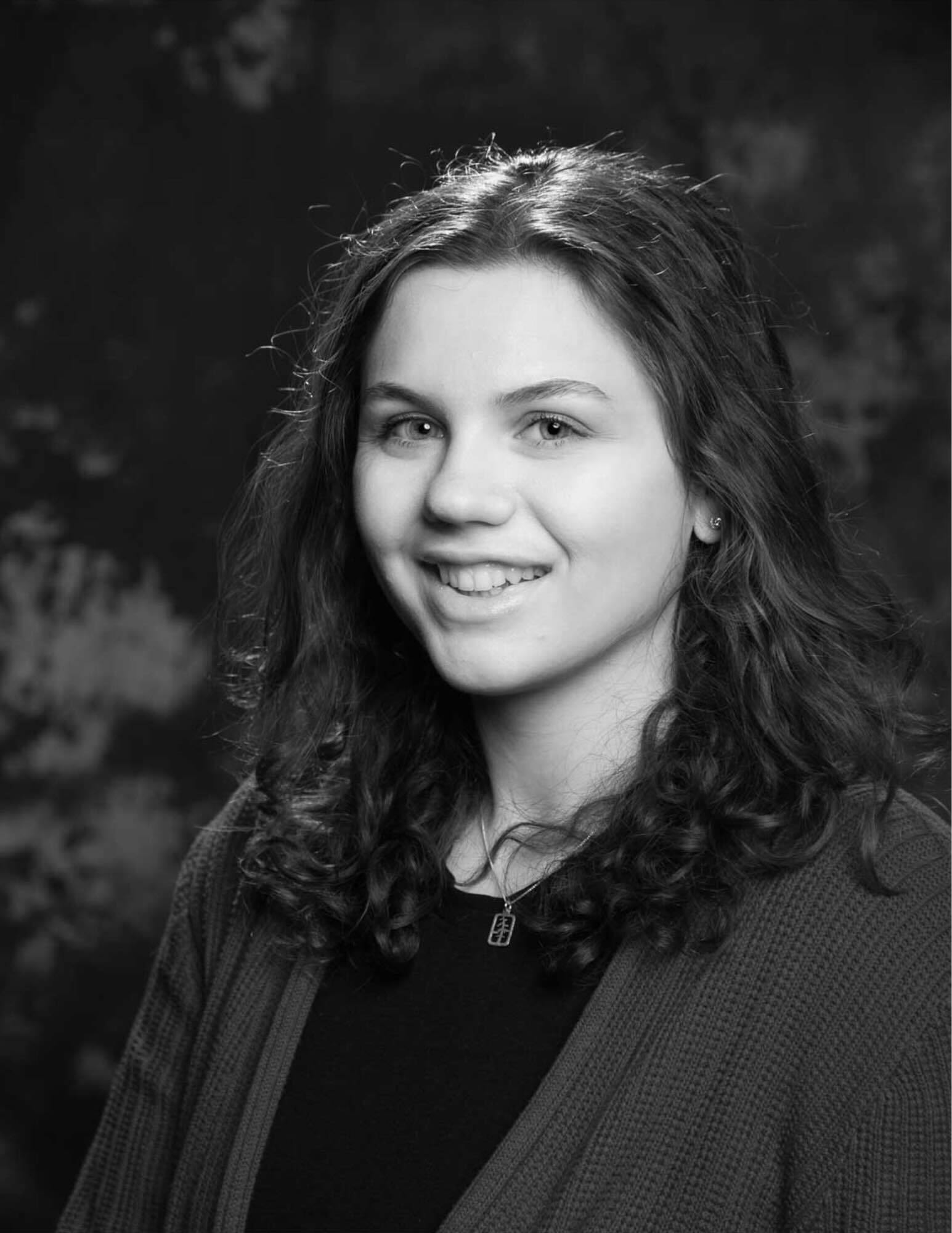
Julia, tell us a bit more about yourself. Where does your desire to be a director come from?
Storytelling has always been an important aspect of my life. I originally started out writing and acting, and when I got to university I wanted to see some of my scripts come to life. I developed a bit of a taste for directing in my classes and when I got to my final year, my thesis project was a 25 minute short thriller film I had directed. That was my first real film I had taken on as a director and just fell in love with the process. There’s something really special about coming up with an idea, writing it down on paper and then seeing that vision come to life on the screen.

What is your background?

I started out with acting in high school. I had done some community theatre, I participated in my school’s musicals (both on stage and backstage), I took acting classes and did a couple short films. In university I did a major both in theatre and film. I wanted to study acting, but I also was interested in understanding the world of film better. That’s where I really got to develop my skills as a writer, director, and editor. Since graduating I have continued with filmmaking. I actually had taken a break from acting to focus on writing, directing, producing and editing. I graduated in October 2022 and had filmed and wrapped production on Desperate Measures by April 2023.

Vishnu Nirvana won Best Supporting Actress at the RED Movie Awards, what does that mean to you and for him?
I am incredibly proud of Vishnu for this amazing achievement, and when I first heard the announcement, I wasn’t surprised he won. He gave such a stellar performance in this film. Watching him on set was such a joy to witness. Vishnu and I have actually worked on another film and we are planning on shooting more in the future, and I think that this proves just how well we work together. – Julia What stood out was the trust. She trusted me with choices, even risks, and that gave me confidence to go deeper into the role. Winning this award is an honour, but the truth is it belongs just as much to our director. Without her guidance, I wouldn’t have found this version of the character. – Vishnu

How did you work with the actors, in particular with Vishnu Nirvana ?
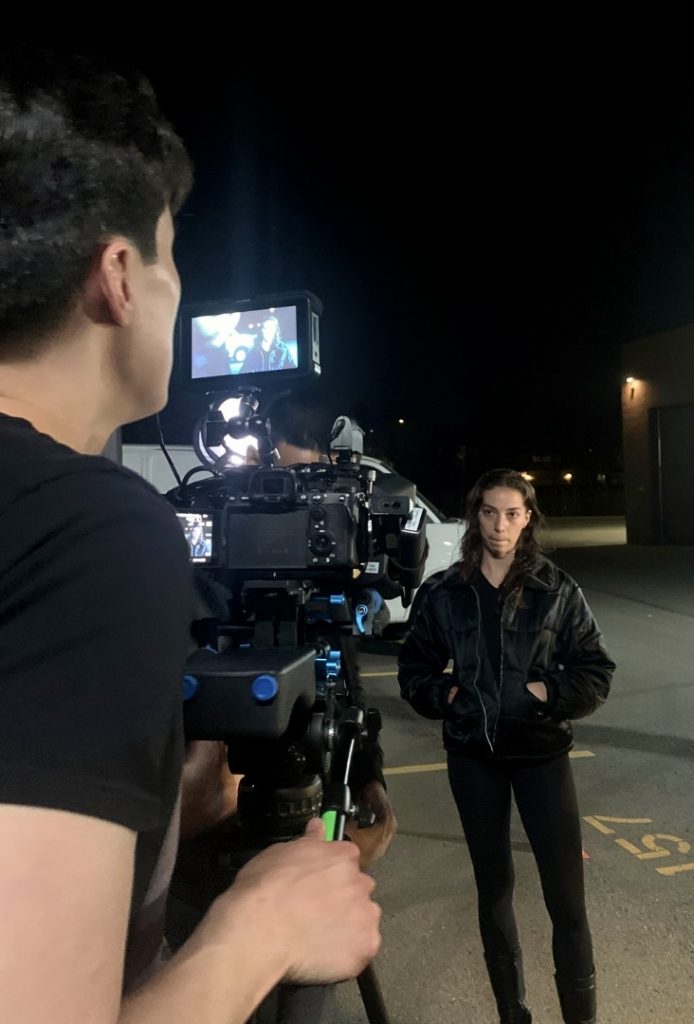
I really aim to create a collaborative environment on my sets with both my crew and cast. I always have an idea of what the character will be, but I encourage the actors to bring their own visions to the role and to really speak up if they have a question or something they want to try out. I’ll often have long conversations with my actors where we discover things about their characters together; What their motivations are, what their fears are, what their beliefs are, etc. For this film, I asked a lot of the actors. There were fight scenes, stunts, long nights, roughly 15 pages of dialogue that they had just over a week to memorize and they absolutely nailed it.

You mentioned your fascination with anti-heroes—what inspired the creation of Matt and Skylar, and how did you work with your actors to bring out the complexity in their justifications and choices?
I’ve always been more drawn to protagonists whose moral complexion is not so clear cut as good vs evil. Their struggle to decide what to do next is what’s fascinating to me because it feels a little more unpredictable and realistic and relatable. Everyone has a little bit of good and bad in them. As human beings we sometimes make the selfish choice because it’s what’s best for us and then we’ll come up with a million different excuses to justify such behaviour. While I do not condone Matt and Skylar’s choices in the film, I do find following their journey from bad to worse very interesting as it shows that we can truly be our own worst enemies through self-sabotage in the pursuit of self-preservation.

Can you tell us about your production method, are you produced or self-produced?
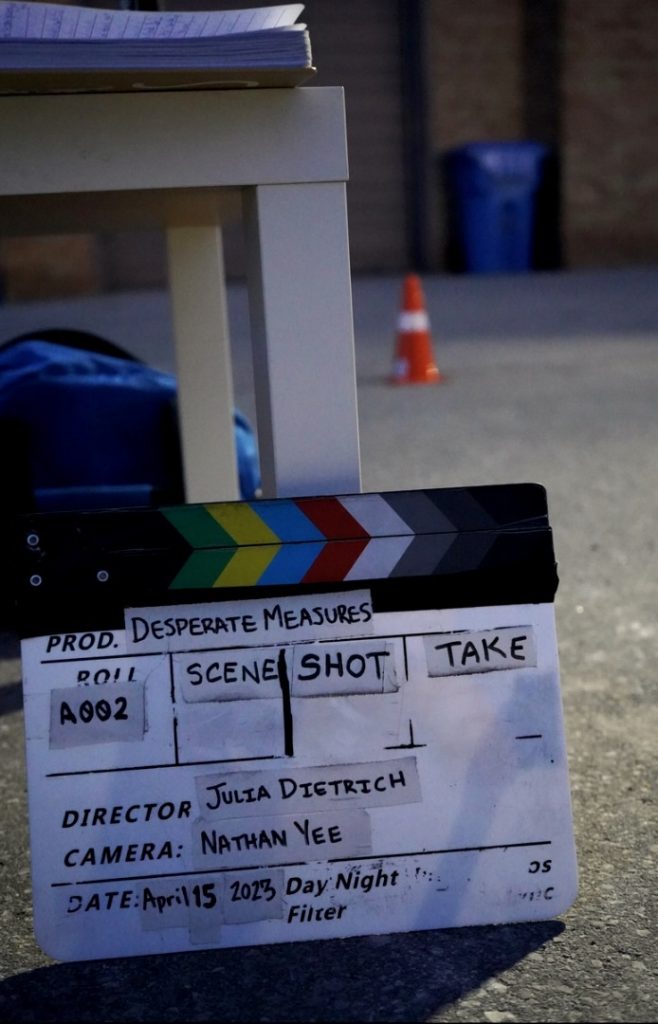
This film is entirely self-produced. I had done a few smaller scaled short films before and was a bit used to having to produce them myself given the small budgets, however, Desperate Measures was definitely a big step up for me. It was my first time really working with a crew. Before Desperate Measures the largest number of people I had worked with on set was 5, and with Desperate Measures suddenly I had 15 people to work and direct and lead on set. It was a bit overwhelming going into production, but once on set, everything just fell into place.

What does this mean for the creation of a film?

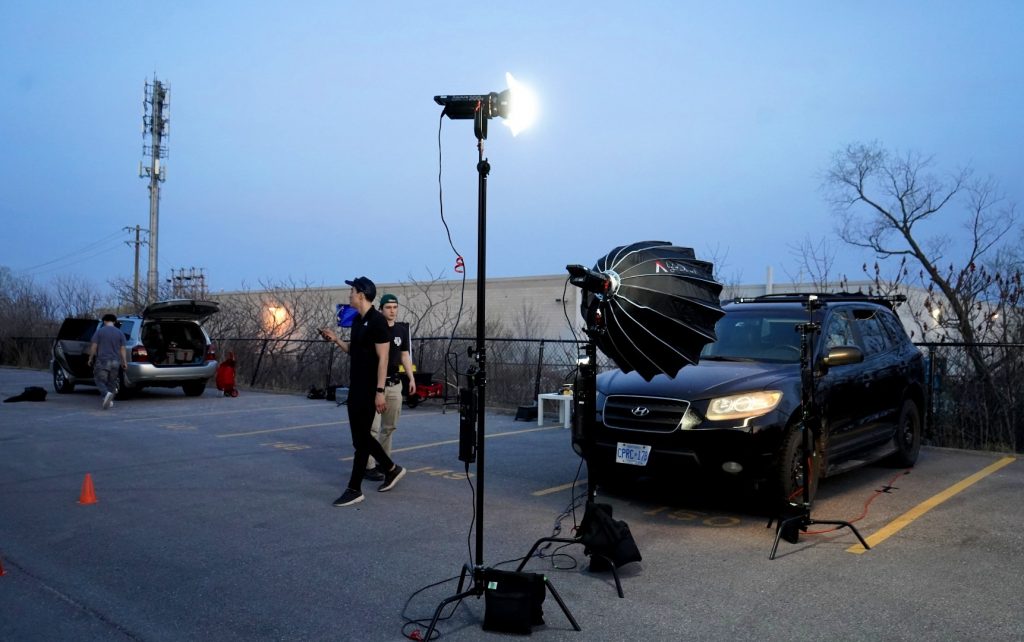
To self-produce a film essentially means that I was handling every little aspect of the film from pre-production all the way to the premiere. This involved sending out cast and crew calls, running interviews/auditions, getting insurance, running the crowd-funding campaign, ensuring we had all the equipment we’d need, and even doing some other department jobs like getting props and scouting locations. This is not to say I didn’t have help. Once I brought people into the team they added so much value, like my cinematographer, Nathan Yee, who had all of the camera, lights, and sound gear we’d need, so we didn’t have to worry about renting.

What were your references for Desperate Measures?
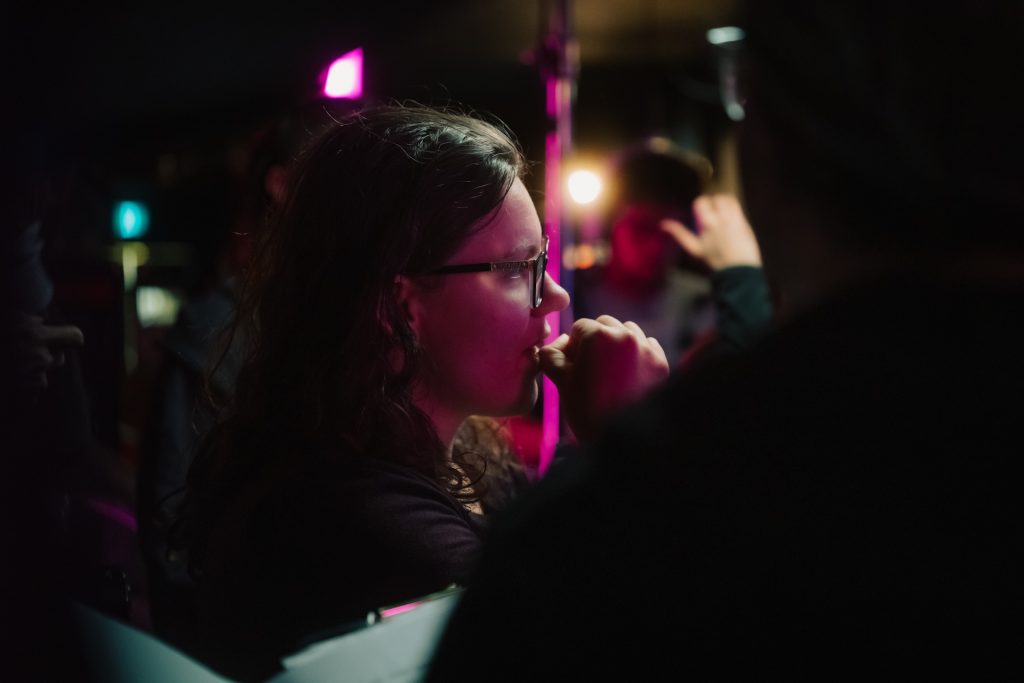
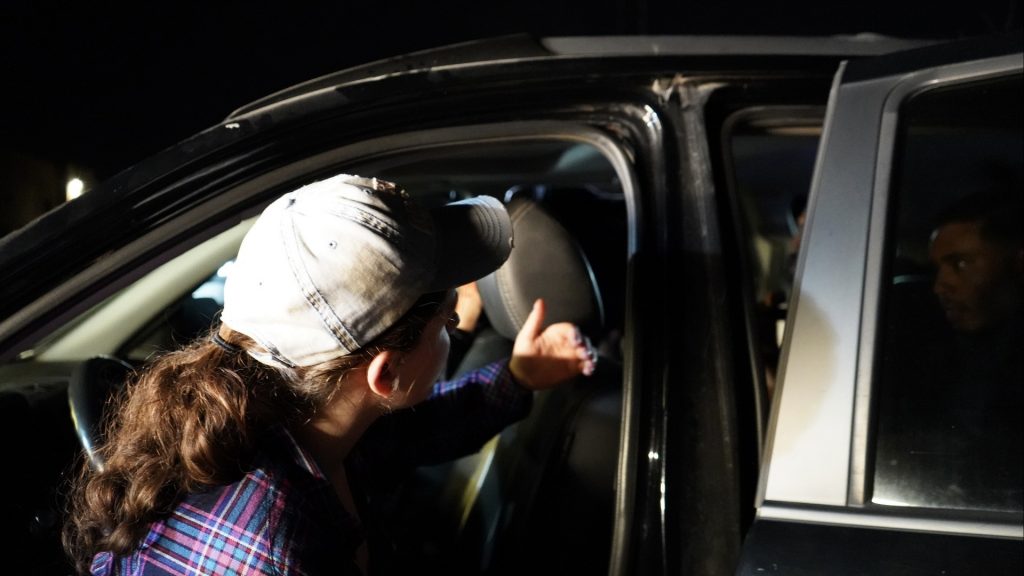
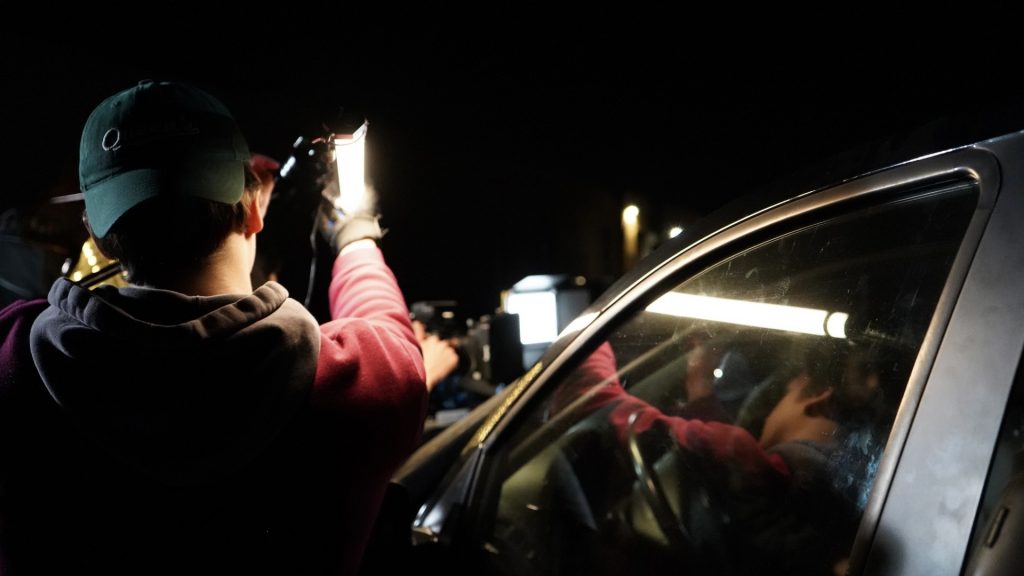
As Desperate Measures is a film that predominantly takes place in a car at night, the film Drive (2011) was an inspiration from a visual standpoint. A car is a pretty small space, especially with 3 actors, a cameraman, and a boom operator squeezed in there, so we had to be smart with how we shot the film. I really liked that greenish tone that’s set throughout the film. We ended up going with a palette of green and blue and I just loved how these colder hues made the tone of the film feel that much more bleak and grim. I also loved the use of shadows in Drive. I wanted Desperate Measures to feel rich with contrast and the frame to be saturated, even the darker hues. This being a night scene, it was of course very important that the film not be too dark so the audience isn’t struggling to make out what’s happening the entire time, but I also didn’t want the frame to look washed out. So many films today just seem very flat, so it was important to me that we find a balance between the film looking dark enough to set a tone, without looking bland, and I think our team accomplished that.

Do you have an anecdote to share with us in particular?
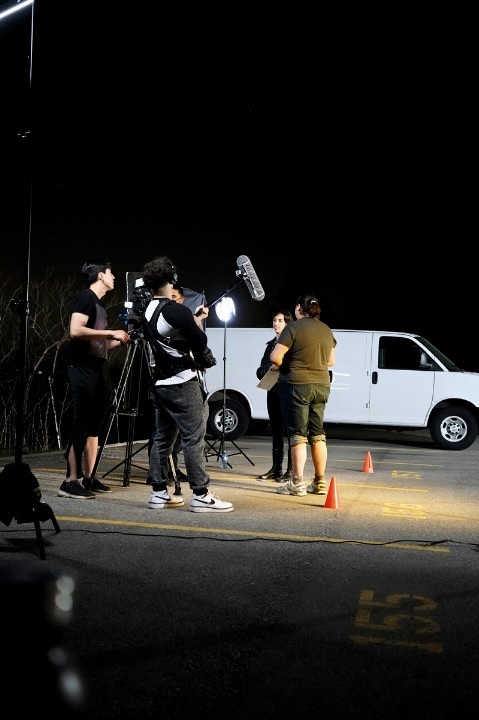
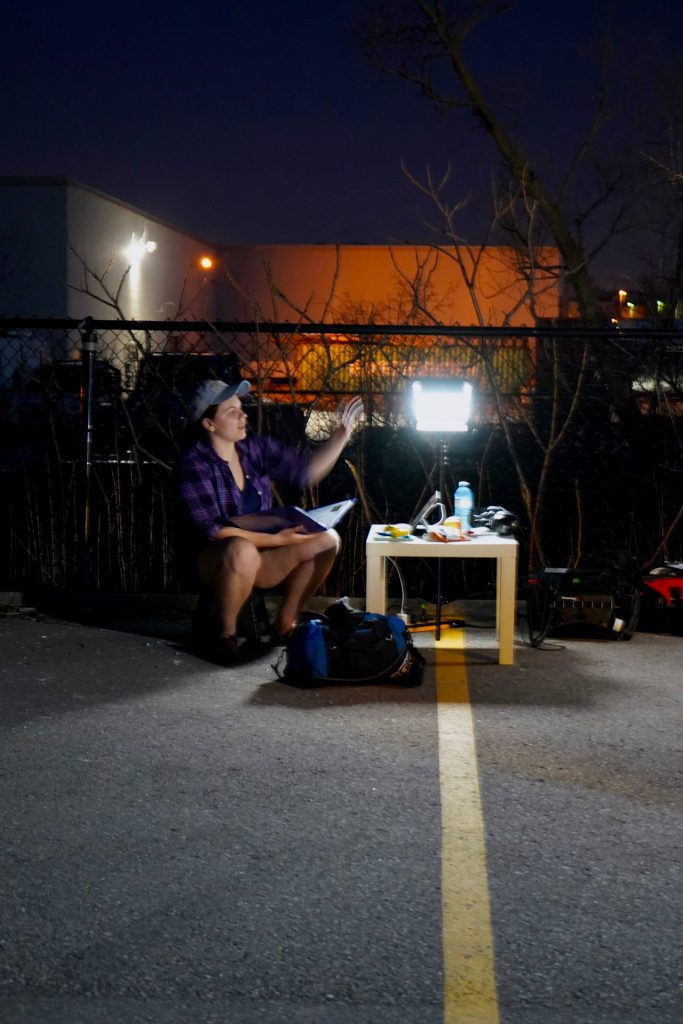
This production was the first overnight shoot for many of us, and by the second night, no amount of caffeine, whether it be in the form of coffee or energy drinks, could keep some of the crew awake. There are a number of pictures and videos of certain crew members (who shall remain nameless) sleeping on our stunt crash mat, bundled under coats and blankets in the studio we were using to store equipment and food at three o’clock in the morning. At one point during our break, they even turned the lights off to get a better nap. But I can’t complain too much, since whenever they were needed, they were available and ready to go.

What is your next project?

As a writer, I have a number of projects in development. It’s sometimes hard to choose which one to do next. There’s another short film I’d love to take on, as well as a feature film I have written. It’s a drama, with undertones of crime, revolving around three strangers who are stuck in a cabin during a blizzard, and they all have secrets that are slowly revealed as the night goes on. I have a proof of concept short film already made for that, so to then see it become this 90 minute film would be really special.