THE INTERVIEW

December, 2025

KRISTINA LORENT GOZTOLA

DIRECTORS OF SOFT FLOATING IN THE FIELDS OF SPHERES

Kristina, tell us a bit more about yourself. Where does your desire to be an actress come from?
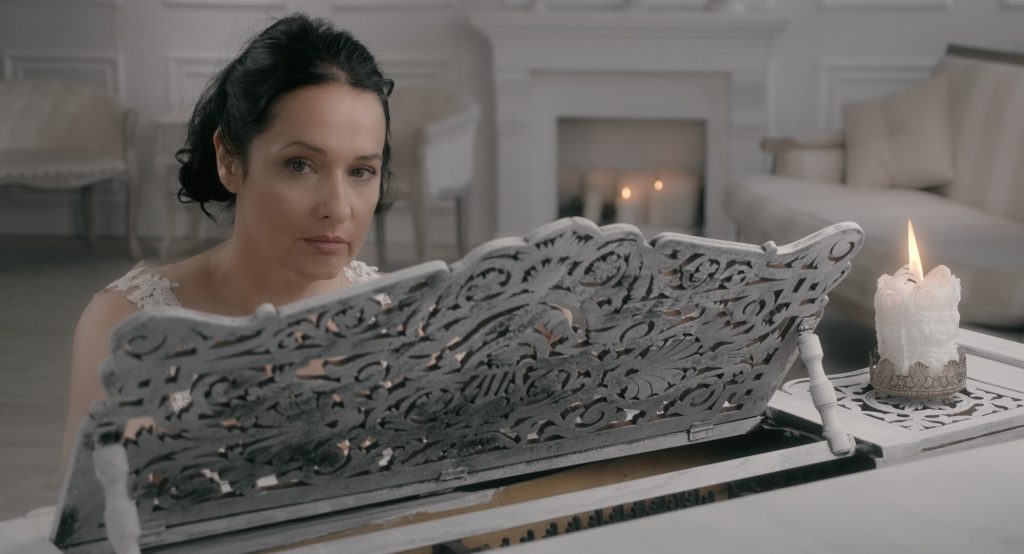
I was born in a small Hungarian town near Austria. On my mother’s side I have Austrian roots. My great-great-grandmother was from Vienna, and my great-great-grandfather brought her home during the time of the Austro-Hungarian Monarchy, when he served as a hussar. On my father’s side I come from a family with a strong scientific background — my father was an engineer and physicist. Already in my childhood, a kind of interesting duality appeared in me: in everyday life I was a rather quiet, shy little girl, yet I had a strong desire to perform. The magic of the stage captured me very early. From the age of ten I studied ballet, folk dance, went to music school, and learned solfège. I completed my secondary education at a music-focused high school, where I graduated in classical singing, and from the age of nineteen I played in theatres — mostly leading roles in musical productions.

What is your background?

After several leading roles in theatre, I moved to London at the age of 26 to study film acting, and later continued my training in Los Angeles at the New York Film Academy. I had exceptional teachers who opened a completely new way of seeing for me. I was fortunate to work with coaches such as Bernard Hiller and Jack Waltzer, who have trained world-renowned actors including Susan Sarandon, Dustin Hoffman and Sharon Stone. These years shaped me not only professionally but also personally, and they guided me definitively towards the world of film. Throughout my career I have worked mainly in English-language international productions. I had the chance to partner with Jason Clarke, and I appeared in films alongside actors such as Rosamund Pike, Mia Wasikowska and Kristanna Loken. 2015 was a particularly defining year for me: I was invited to Avignon to play one of the leading roles— in French— in Matei Vișniec’s two-hander Du sexe de la femme comme champ de bataille. This experience touched me deeply. The French culture and the universe of auteur cinema drew me in with such force that from that point on, the French art-house direction became the natural continuation of my artistic path. Until then, I had mostly worked in English-language productions, but after Avignon the French creative environment became essential for me. In recent years Paris has become my artistic base, and I also founded my Paris-based film production company. It was a conscious decision to follow the French art-house path: that sensitive, author-driven approach where the depth of the human soul meets visual poetry.

Why did you accept the role for Soft Floating in the Fields of Spheres?
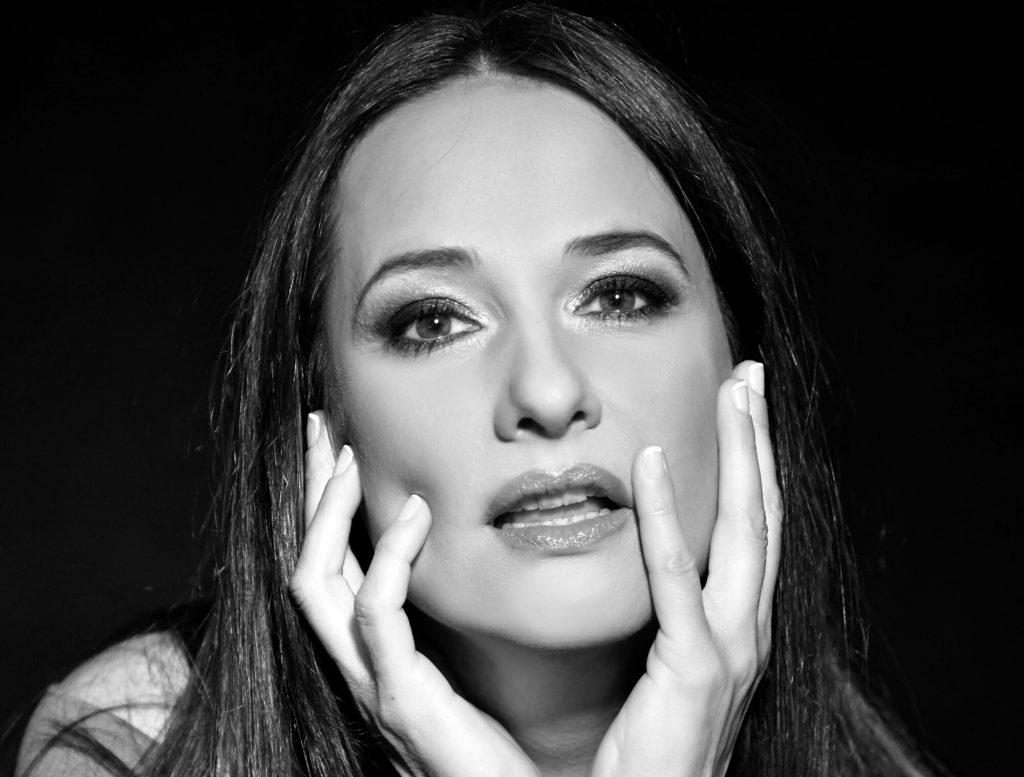
When the director, Peter Korday, approached me with the idea of playing Rebecca, I have to admit I was skeptical at first. I wondered how such a deep and intimate story — the inner journey and struggle of a soul — especially in a monodrama-like structure, could be truthful on screen. How it could remain emotionally authentic without becoming overly sentimental or leaning on familiar clichés. But then Peter convinced me that this would be something much more. That it wouldn’t only be Rebecca’s story, but something far more universal: that through Rebecca, the viewer would be able to reflect on their own life, their own experiences, their own losses and their own questions. And this is what truly drew me in. I realized that this film touches something that speaks to everyone — regardless of age, gender, or background. A question that, sooner or later, each of us has to face.

Kristina you won Best Actress at the RED Movie Awards, what does that mean to you?
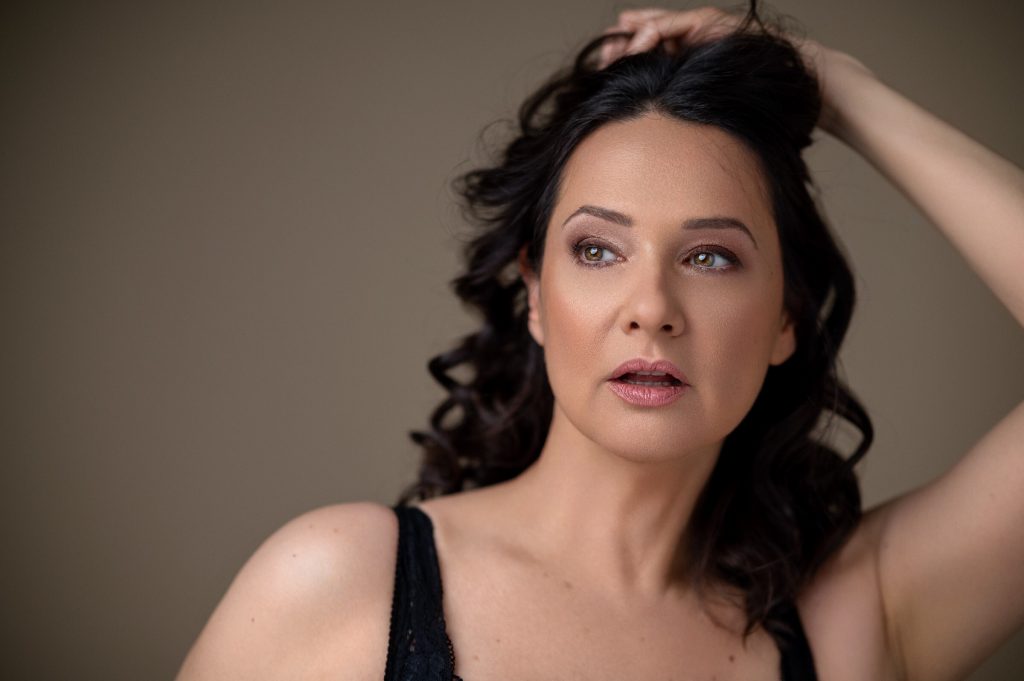
As an actress, portraying such a deep role is always a very special journey, and inevitably you ask yourself: did everything I lived through internally truly come across? This is why professional feedback is extremely important for us, actors. The love of the audience is a wonderful gift, but it is the recognition from the industry that truly gives direction and strengthens your work. For me, receiving an award from the Red Movie Awards is especially meaningful for two reasons. First, because it is a thoughtful and professional acknowledgment — and that always matters. And second, because it comes from France, from the artistic environment I’ve been working in these past years, the world that is so closely connected to French arthouse film. This makes the recognition even more special and deeply honoring for me.

How did you work with the director?

I had worked with Peter before, and I genuinely love working with him. Partly because he also has a theatre background: he started his career as a theatre director before moving into film. Even in his earlier work I could see how sensitively he approaches actors, and how precisely he understands what an actor needs in order to feel safe in front of the camera. He has that special kind of intuition — knowing exactly when he needs to guide the actor more actively, and when he should step back and simply let the actor work on their own. Throughout the entire shoot Peter paid a lot of attention to creating a warm, protected atmosphere. We deliberately worked with a small crew, so that I could stay inside Rebecca’s fragile and vulnerable emotional state the whole time. There was one scene I was especially worried about — the so-called “teddy bear scene,” where Rebecca covers the little ceramic bear with flower petals. This moment symbolises when Rebecca finally lets go of her baby, so emotionally it was one of the most delicate and vulnerable points of the story. Normally we talk through every scene in detail beforehand — Peter is a very thorough director — but for this one he told me he didn’t want to give any instructions. He wanted to see it as an improvisation. I was a bit nervous about that. I remember that for this scene only a few of us were in the room; Peter intentionally created an intimate, quiet, protected space, so that I could feel completely safe emotionally and stay inside Rebecca’s fragile state. He didn’t say anything — he just started the camera: “camera rolling… action,” and then he waited. There was a long silence. And he watched that silence, waiting for something deep and truly honest to be born from it.

Your role in Soft Floating in the Fields of Spheres is deeply emotional and rooted in an intimate exploration of the subconscious. What was your first reaction when you discovered this character and her journey across different timelines?

The film explores Albert Einstein’s idea that time is, in reality, only an illusion. The story unfolds across four different timelines, and Peter Korday, the director, created four completely distinct visual worlds to express them. As an actress, I approached the role with the same mindset: even though I only play one character — Rebecca — I tried to build her from four different angles, so that each timeline would have its own emotional and inner identity. For me, the most important goal in portraying Rebecca was that after the first 15–20 minutes, the audience would no longer see me on the screen as an actress — and not even Rebecca as a “character” — but would begin to reflect on themselves. I wanted Rebecca’s journey to become a mirror: something that makes the viewer think about their own life, their own losses, their questions, their emotions. There was one sentence Peter said during our work together that stayed with me the whole time: “There are lives we never live, but we still somehow feel them within us.”

Rebecca goes through intense experiences: motherhood, loss, guilt, and the possibility of parallel lives. Which aspect of her journey was the most challenging or transformative for you to embody?
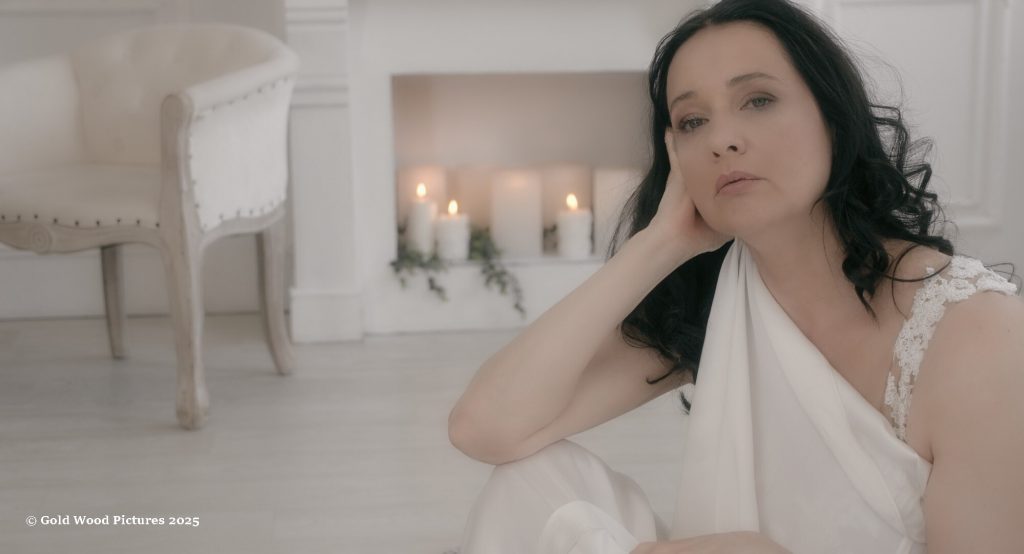
Rebecca’s story was a huge challenge for me overall, because Peter was very determined that even though the film has multiple characters, its structure should still follow the logic of a monodrama. He also insisted on working in a completely stylized environment: Rebecca is almost entirely separated from the outside world, there are barely any sets, almost no props, and practically none of the usual tools an actor can rely on. There is no real dialogue in the film, no partner I can react to, no interaction, no external situation I could respond to. Because of this, the traditional acting tools simply wouldn’t have worked — in fact, they would have felt completely false when trying to portray Rebecca’s inner journey. So I used what I learned from my teachers: the simplicity technique. It’s when you seem to “do nothing” on the outside — everything looks very minimal, very stripped down — but inside, an extremely intense, active emotional process is happening. In this approach, the actor lets go of all unnecessary gestures, mannerisms, external playing — and that’s exactly what makes the performance truthful on camera. My teachers always said: in front of the camera it’s not enough to “look” — you have to see. And throughout the whole process of creating Rebecca, this was what I tried to follow.

What was the biggest challenge in this shooting?

The biggest challenge — beyond the technical aspects I mentioned earlier — was that in this film we don’t actually see Rebecca as a traditional character, but rather Rebecca’s soul. Her inner world, those emotional layers that exist much deeper and much more quietly than anything that could ever be shown in a realistic situation. Emotionally, the most difficult scene was definitely the one I already mentioned — the “teddy bear scene,” when Rebecca covers the little ceramic bear with flower petals. This moment symbolizes the letting go of her baby. It’s a moment of loss, but not in a realistic, external way — we don’t see the event itself, we see what is happening inside Rebecca’s soul. In this scene, I couldn’t use any traditional acting tools, because they simply wouldn’t have been truthful. I would play a real-life situation very differently, but here I had to show Rebecca’s inner grief — not her external reactions. I had to work with extreme delicacy and simplicity. Any big gesture, any loud crying would have felt false.

Do you have a particular anecdote to share with us?
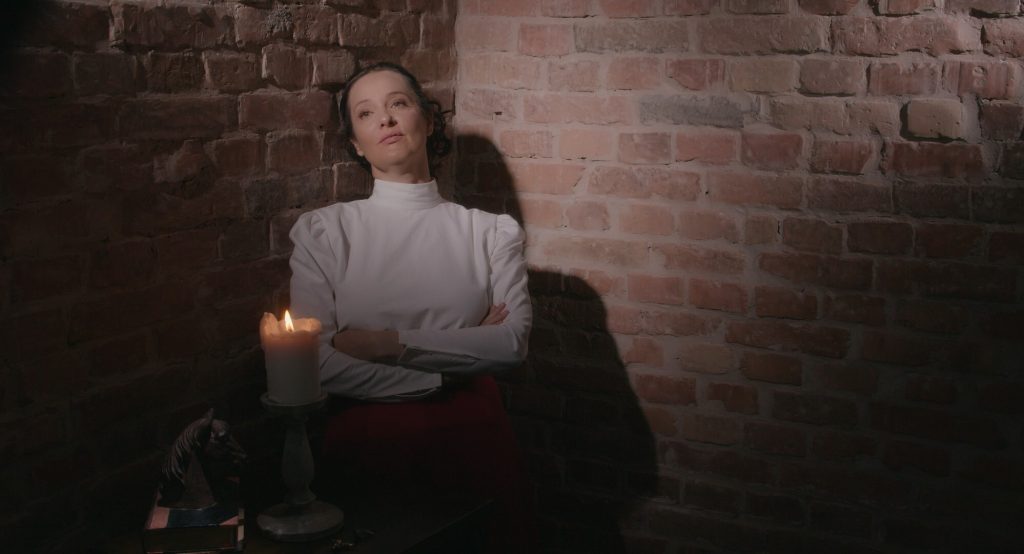
Yes, I do have a lovely story from the shoot. The director, Peter, put an enormous emphasis on making the hospital and surgery scenes completely authentic. That’s why he decided that the doctor in those scenes would not be played by an actor, but by a real, highly respected surgeon — so that every movement, every rhythm, every tiny detail would be absolutely true to life. I remember that shooting day incredibly vividly. The surgeon worked with exactly the same gestures, the same timing, the same precision and speed as he does in real operations, where he literally saves lives every day. He created such a strong, almost tangible atmosphere in the room that the entire crew — including the cinematographer and the small team who were inside — stood there in complete silence, just watching, almost frozen. It was the kind of experience you only encounter a few times in your entire life.

What is your next project?

I’m currently filming a dramedy — a modern drama that also has light, comedic elements — and I play the female lead in it. At the same time, we’re preparing two major projects with our own production company. One of them is an arthouse drama with romantic elements, in which we want to continue strengthening the French arthouse direction. The other is a comedy with subtle vaudeville touches, set on the Côte d’Azur. Both screenplays are finished, and we’ll continue working on them in the near future.