THE INTERVIEW

October, 2026

PETER KORDAY

DIRECTORS OF THE NECKLACE

BEST EXPERIMENTAL
Peter, tell us a bit more about yourself. Where does your desire to be a director come from?
I essentially come from a theatre family. My father ran a theatre in Hungary and also worked as a stage director, while my mother was an actress, a teacher, and also directed for the stage herself. So theatre became a natural part of my life from a very early age. At five, I was already performing in a children’s play with my mother, and from the age of seven I studied music intensively, including piano and solfège. When the time came to choose a profession, becoming an actor seemed completely natural to me. I graduated as an actor from the University of Theatre and Film Arts. I performed extensively in theatres, playing leading roles in dramas, comedies, and musical productions. In practice, I had the opportunity to explore almost every genre. Then, after one successful premiere, the theatre director called me into his office and offered me the opportunity to direct a production the following season. From that point on, there was no turning back. To be honest, I have always been more of a director than an actor by nature.  I mainly directed musical productions: musicals, operettas, and opera. Opera was the form I felt closest to. I directed and performed in the United States, Canada, Japan, Italy, and Germany, working on wonderful musicals such as The Phantom of the Opera, Jesus Christ Superstar, Chicago, Funny Girl, and Anna Karenina, while also directing straight plays including Gogol’s comedy Marriage. To be honest, I have always been more of a director than an actor by nature.

What is your background?

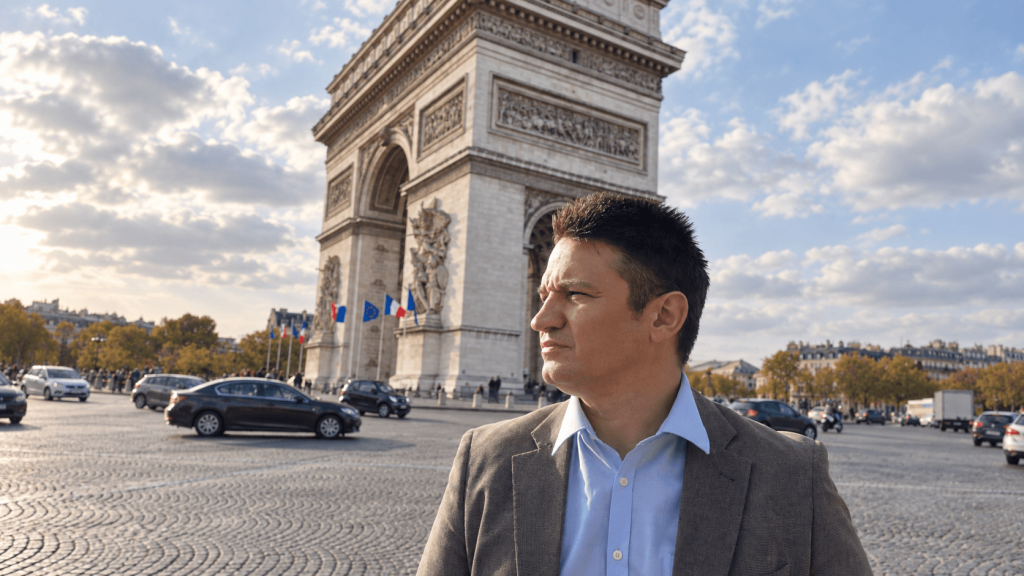
My first truly personal encounter with cinema was, strangely enough, connected to Los Angeles. I worked there for several years as a musical theatre director, and during that time I lived in the former home of Oscar-winning director Frank Capra. The entire house was filled with posters from his films and with memorabilia that had remained there from his lifetime. It had a very strong effect on me. There was something particularly thrilling about it: I was living in Los Angeles as a theatre director, while at the same time staying in a house that constantly reminded me of Hollywood film history. I felt an enormous sense of pride and gratitude because of that, and somehow I felt that, in a small way, I too was part of that world, even though at the time I had no thought at all of ever directing a film myself. It was really in Paris that I truly encountered film directing. I find it very interesting that cinema as a creative form is entirely connected, for me, to France. It was there that I began to think differently about image, time, silence, and about how a story can be told without words. While in Los Angeles I did not yet have that inner flame to make films, the world of French cinema—with its particular subtlety and its deeply emotional way of expressing itself—completely drew me in. As a film director, I began from within that French environment, and I believe it has continued to shape very deeply the way I think about cinema ever since.

What were your references for The Necklace?

I had no external references or particular films from which I drew inspiration. This film grew out of my own inner world, from musical rhythm, and from my experiences of living in Paris.
In truth, I never set out to become a film director, so I did not have that anxious desire to prove myself or to conform to any expectations. I simply felt, as a director, that there were certain things that could not be interpreted or expressed on stage with the same depth as they could on screen.
There is an interesting saying: if someone is a successful film director, there is a good chance they can also become a strong stage director. But for a stage director, the transition into film can be much more difficult.
The reason is that theatre is the world of wide perspectives, a fixed point of view, and a certain spatial exaggeration—the actor has to reach the very back row. Film, by contrast, is the art of detail, of the smallest movements captured by the camera, and of silence. For someone coming from theatre, it can be difficult to let go of that large-scale stage vision and adjust to the idea that, on screen, a single subtle glance or one precisely placed shot can say more than any words.
But I have always loved challenges. I found it fascinating to discover an entirely different language of directing and to learn how much can be expressed through restraint, detail, and silence.
You won Best Experimental at the RED Movie Awards, what does that mean to you?
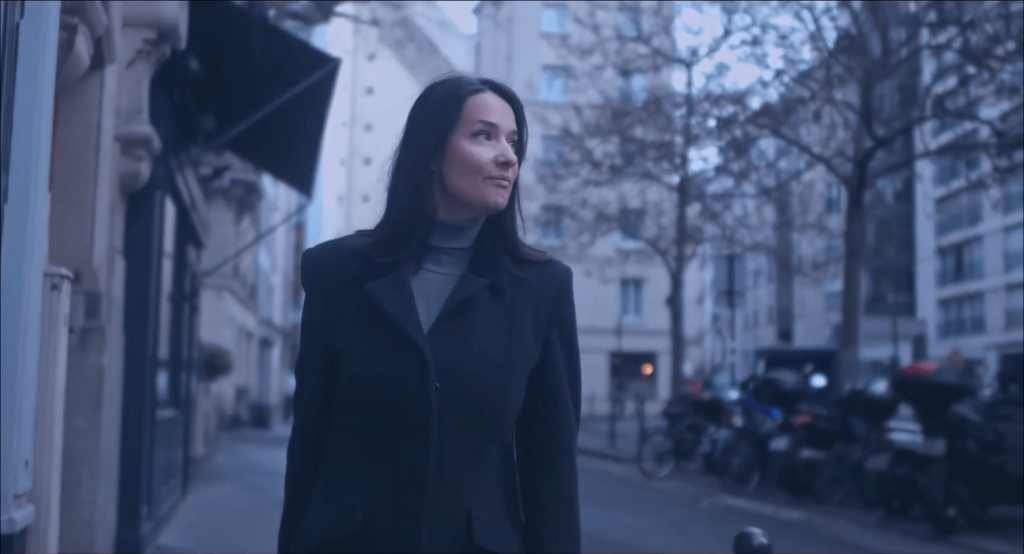
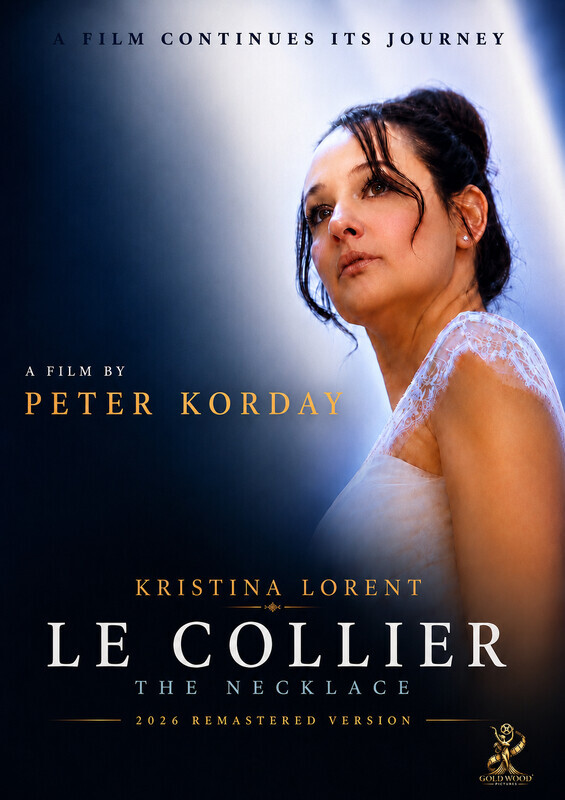
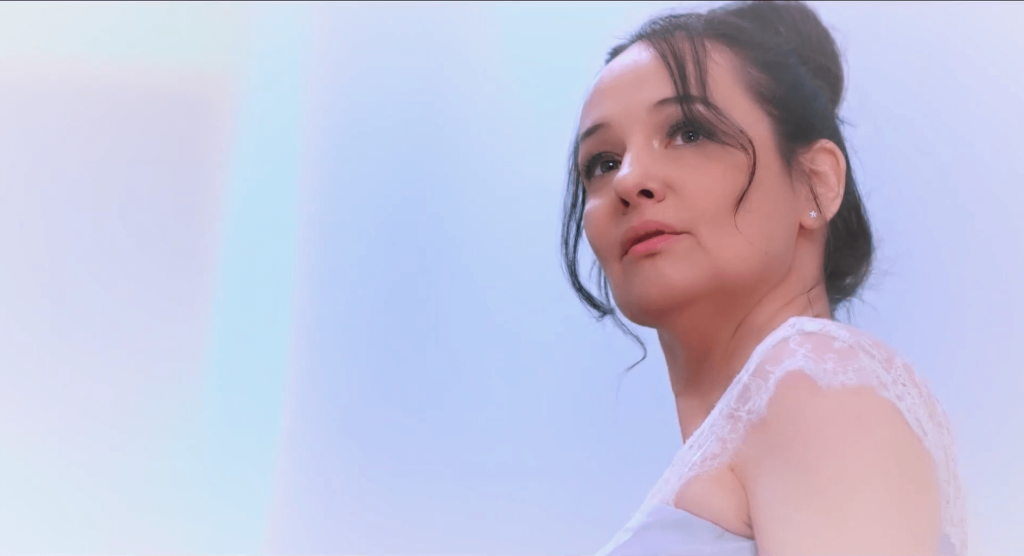
It is an enormous honour, and I feel deeply grateful for this award. It is especially meaningful to me for several reasons. First of all, although it is an international festival, it is still very closely connected to France. We shot the entire film in Paris, with a French crew and French actors, and my aim was to capture that very particular atmosphere, that feeling which had fascinated me so deeply in this beautiful city. Although the film has already received recognition in many parts of the world, this award is perhaps the most beautiful of all, because it comes from the very place that inspired the film. Secondly, this film represents a very important milestone for me. It was one of the first truly significant steps in my journey as a director. This was the point at which I began shaping every creative layer of the film with much greater awareness and determination—from the casting and the visual world to the editing. Now that we have created a restored version, and that it has also been recognised on such a prestigious international platform, I look back on this early work with a particularly strong sense of gratitude and affection.[10 h 27]5. Your film relies heavily on atmosphere, silence and visual storytelling. Why was this approach important to you? This approach—the alternation between silence and music, and the dominance of visual storytelling—was clearly shaped by my theatrical past and my musical background. Looking back, it is very interesting to realise that, while I was creating the film, I was not even consciously aware that I was in fact reaching back towards the roots of French art-house cinema. It was only much later, when others pointed this out to me, that I realised I had probably been drawn, almost instinctively, towards those subtle and profound cinematic tools that have always attracted me so deeply. When I accepted the directing role, I felt that I had two possible paths ahead of me: either I could try to imitate the established methods of experienced, traditional film directors, or I could remain completely true to myself and bring to the film what I already carried within me as a theatre director. I chose the latter. From the very beginning, it was essential for me to weave the visual world of the film closely together with music—and to this day, this remains one of my most important directing tools. It was obvious to me that I would use classical music: Gounod, Puccini, Verdi, and particularly their grand, sweeping themes, because I believe deeply in that classic cinematic moment when dialogue falls silent, the music expands fully, and the camera together with the actor’s face takes centre stage. Before shooting, we rehearsed with the actors for two or three weeks—even for a short film of this scale, I considered that absolutely essential. I remember that casting the male lead was an enormous challenge. A great many talented actors applied. In the end, the role went to Mathieu Barbos, who had to portray a blind man. Mathieu and I rehearsed extensively. Technically, he was already perfect during rehearsals, but I wanted something more: when the audience first saw him walking down the stairs, I wanted them to love him immediately. Mathieu had to be vulnerable and dignified at the same time. Then, on the day of the shoot, at the exact moment we were filming the scene, I decided to trust my directing intuition—but I did not tell the actor beforehand. I asked the crew for complete silence, and I asked the colleague responsible for sound to play the sweeping overture from Verdi’s La Traviata as Mathieu began walking down the stairs during the take. Mathieu started down the stairs, and then, after a few seconds, the music suddenly began. In that instant, the actor’s face changed completely. His posture changed, his gaze changed, and his entire expression was transformed.

Paris feels almost like a character in the film. What did you want to express through the city and its atmosphere?

For me, Paris represents elegance, romance, independence, and a deep inner sensitivity all at once. I imagine that if I were to personify the city, Paris could only be a woman: a beautiful, romantic, but proud woman. I do not think it is an exaggeration to say that it is the most beautiful city in the world, but even more importantly, it has a very particular vibration and atmosphere that resonates perfectly with the theme of the film. This story is about human vulnerability and helplessness, while at the same time our blind protagonist remains the most dignified and positive character in the film. Paris does not merely provide the setting for the story; it is also a silent external observer. Its atmosphere stops the protagonist in the midst of his moral descent. If all of this were happening somewhere else – who knows—perhaps the female protagonist might give in to temptation. There was, however, also a very tangible and almost fateful background to my decision. At that time, I was already living partly in Paris, I had my own established circle and rhythm there, and one of my wonderful friends, Jean-Philippe, a blind musician living in Paris, learned that I was making a film on this subject and voluntarily offered us his multi-level house near Montparnasse as a filming location. This was not only an enormous gift and practical help from a logistical point of view, but artistically it was also invaluable. We were able to shoot in a home that, in real life, belonged to a completely independent, active blind man who travels the world. We did not have to invent anything: every piece of furniture, every object, even the arrangement of the kitchen had been designed exactly around the way a blind person lives his daily life. Jean-Philippe actively performs, travels, is full of energy, and it was precisely this sense of dignity that I wanted to bring into the film as well. I remember the most endearing moment: when Jean-Philippe showed us how he moves around the house when he is in a hurry, we all laughed and were astonished at the same time, because despite being blind, he ran down his own staircase far faster and with far greater confidence than any of us.

Your work often explores the subconscious and metaphysical questions. How does Le Collier fit into that artistic universe?
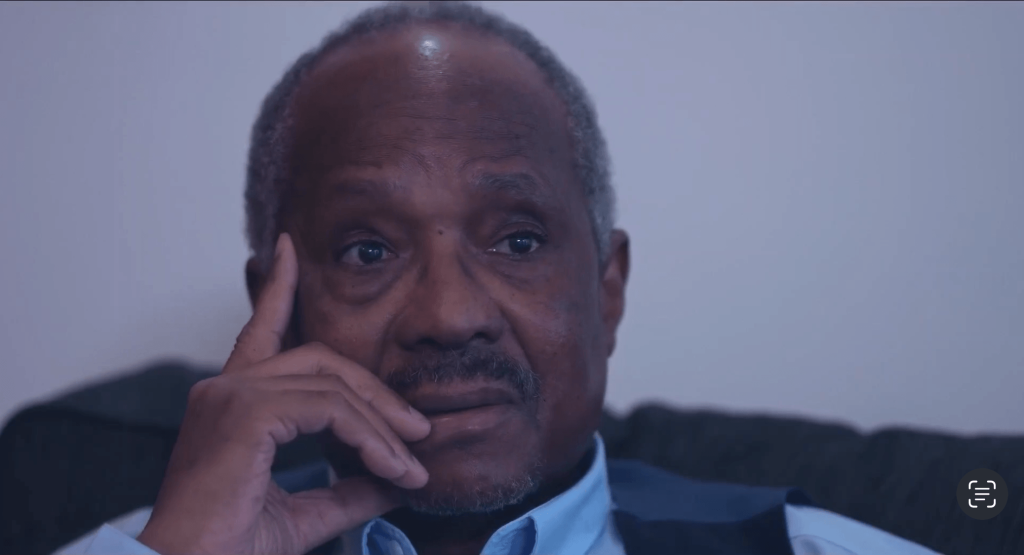
It is extremely interesting for me to analyse this short film, because I can see that, in a way, it foreshadowed my later work. At the time, none of this was conscious, but looking back now, it is fascinating to discover how this film forms a coherent artistic universe with the work I am doing today, and how I had already begun using certain tools there that I would later expand and develop further. Le Collier / The Necklace fits perfectly into this universe because, in reality, it is not an external story either, but a purely internal journey, in which the female protagonist Maia (Kristina Lorent) struggles with her demon (Eric da Costa). For me, Michel’s physical blindness does not symbolise tragedy, but rather a particular inner clarity and a metaphysical state: while he cannot see the external surface of the world, in a certain sense he is nevertheless the one who perceives its essence most clearly. By contrast, through her own subconscious struggles, Maia follows a dramatic path through sin, moral crisis, and inner destruction. The desire for possession and the breaking through of moral inhibitions are not merely a turning point in the plot, but a psychological descent. What has always interested me in filmmaking is that moment when external reality ceases to exist and the characters are left alone with their own inner demons and their conscience—and what happens inside them at that precise moment. To make the invisible visible. Through the meeting of silence and music, this is exactly the invisible, suffocating inner world that I wanted to evoke. After all, the subconscious begins where words run out. This was the first film in which I instinctively opened the door to this dimension.

You recently revisited the film for the 2026 remastered version. What did you discover when watching your own film again years later?
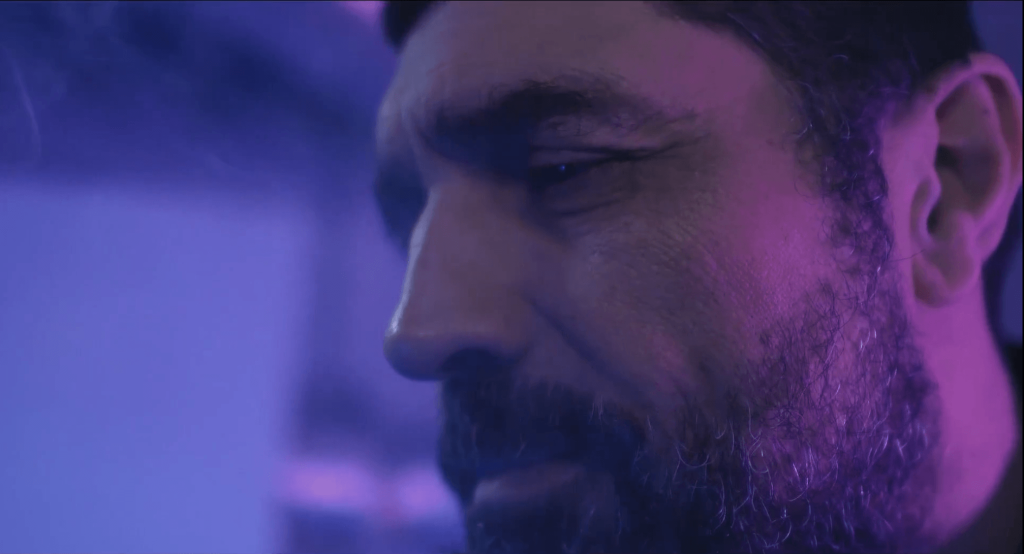
When I watched the remastered version again, it was interesting to see that the themes that still preoccupy me today—this inner journey, the subconscious, and the desire to make the invisible visible—were already present within me at that time, even if I was not yet consciously aware of them so clearly. A director probably never reaches the point where he can say that a film is completely finished. As time passes, we change, we gain experience, and inevitably we begin to notice details that we would approach differently today. Looking back, however, I admire the directorial courage and determination I had at that time, when I stood before the crew on the very first day of shooting. Because as time goes on, one becomes increasingly aware of the weight of responsibility.

Do you have an anecdote to share with us in particular?

There is a lovely story from when we were shooting the film that, for me, illustrates very well how a director’s intuition can sometimes anticipate things in quite a remarkable way. Michel, the male lead, was played by Mathieu Barbos, an actor originally from Martinique who lives in Paris. According to the story, his wife is no longer alive, but she appears in the film in a photograph. When we designed that photograph, I had a very clear image in my mind of what the woman should look like: beautiful, with long blonde hair, and around ten years younger than her husband. Some members of the crew imagined the character differently, but I insisted on this image. We created the photograph with the actress Emilie Favre-Bertin and then showed it to Mathieu. He smiled, took out his phone, and showed us his real wife. We were all surprised: she was a beautiful woman with long blonde hair, with almost exactly the same age difference—and she even bore a certain resemblance to the woman I had imagined as the character’s wife. It is a small story, but one that has stayed with me very vividly. Sometimes, as a director, an image simply appears in your mind, and you cannot necessarily explain where it comes from. Then, unexpectedly, life confirms it.

What is your next project?

I am also actively involved in the writing process, and I enjoy it very much. We have completed two new screenplays, both of which are ready to move into the next stage toward production.  One is a romantic psychological drama, and the other is a comedy set on the Côte d’Azur. We are also working on the screenplay for a short film. I do not want to let go of this form in the future either. Many people think it is an easy task, but it is not at all: within fifteen or twenty minutes, you not only have to develop the narrative arc, but also bring the psychological depth of the characters to the audience in a way that is genuinely effective. That is a serious challenge. This format does not allow you to become complacent; it constantly pushes a director to evolve.